Our cleaning process.
Every tank is cleaned in the same five steps, by trained technicians with mechanical equipment. Here is what happens at each step, and what to expect before and after.
Five steps, in this order.
De-watering
We pump the water out of the tank.
An empty tank lets us reach every wall, the floor and the roof.
High-pressure cleaning
A strong jet of water cleans the walls, floor and roof.
Built-up dirt comes off, even in corners a brush cannot reach.
Sludge & water removal
An industrial vacuum lifts the sludge and dirty water off the floor.
The loosened dirt is taken out, so it does not stay in your tank.
Disinfection
We disinfect the tank with the Clean Tank agent, which is food-grade and non-toxic.
Once we finish, you can use your tank again straight away.
UV treatment
We shine ultraviolet light inside the tank.
An added step that treats bacteria still floating in the tank.
* Where applicable
- Step 01
De-watering
We pump the water out of the tank.
- Why it matters
- An empty tank lets the team reach every wall, the floor and the roof, so nothing is cleaned under standing water.
- Equipment
- Mechanical pumps

- Step 02
High-pressure cleaning
A strong jet of water cleans the walls, floor and roof.
- Why it matters
- The water jet lifts deposits and growth from the walls, floor and roof, including corners a brush cannot reach.
- Equipment
- High-pressure water jet pump, 150 to 250 bar, depending on the tank and the work

- Step 03
Sludge & water removal
An industrial vacuum lifts the sludge and dirty water off the floor.
- Why it matters
- The loosened sludge, sediment and dirty water come off the floor, so none of it is left for the next fill.
- Equipment
- Industrial vacuum cleaner

- Step 04
Disinfection
We disinfect the tank with the Clean Tank agent, which is food-grade and non-toxic.
- Why it matters
- The cleaned surfaces are disinfected against harmful bacteria, so the tank starts clean when it is refilled. The stored water also depends on the source water, plumbing, tank condition and upkeep after the service.
- Equipment
- Clean Tank agent, a food-grade, non-toxic antibacterial agent, sprayed across every surface

- Step 05
UV treatment
We shine ultraviolet light inside the tank.
- Why it matters
- Ultraviolet light treats bacteria still suspended in the tank after disinfection. It is an additional step, used where the tank and site allow it.
- Equipment
- UV lamp unit

Before and after.
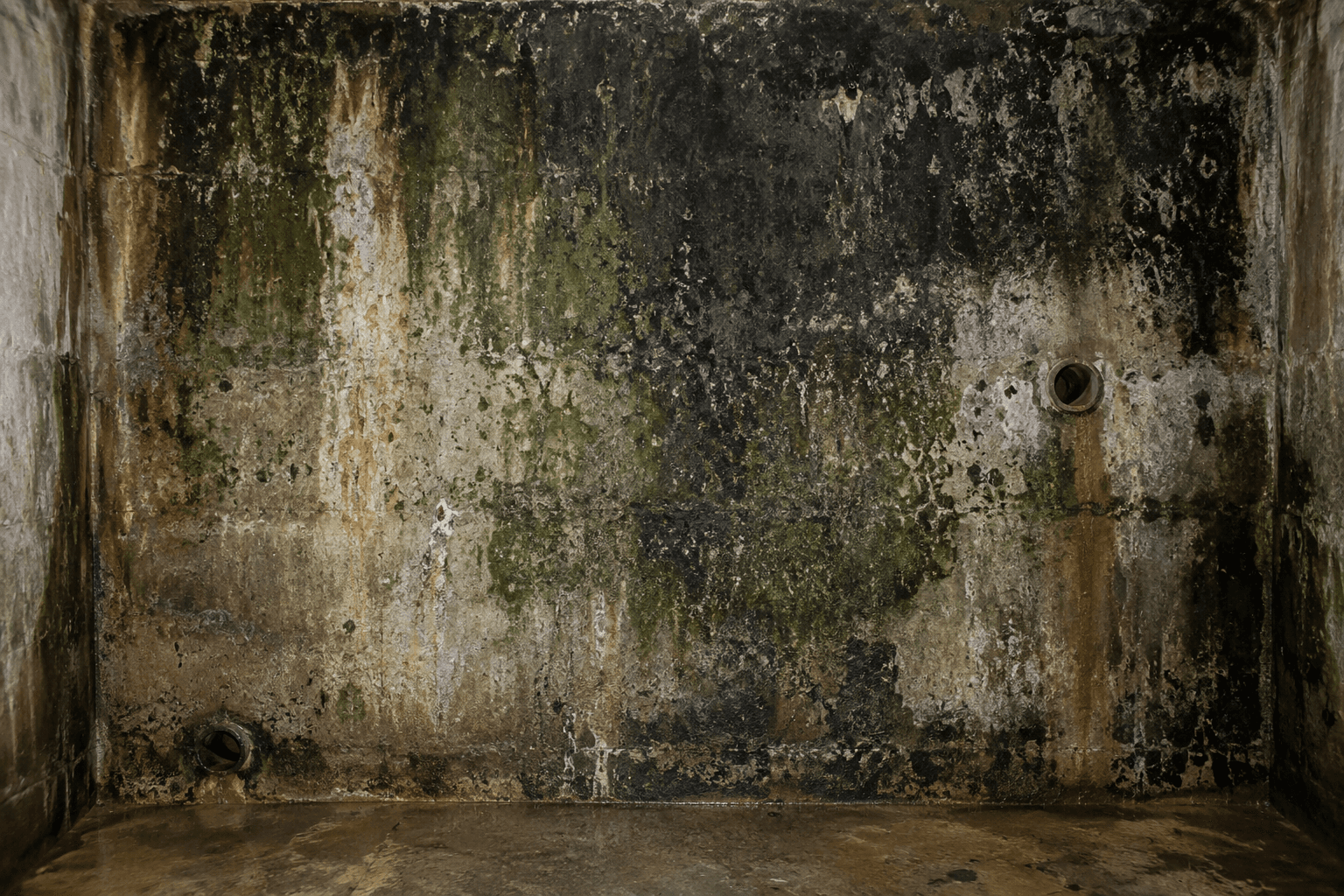
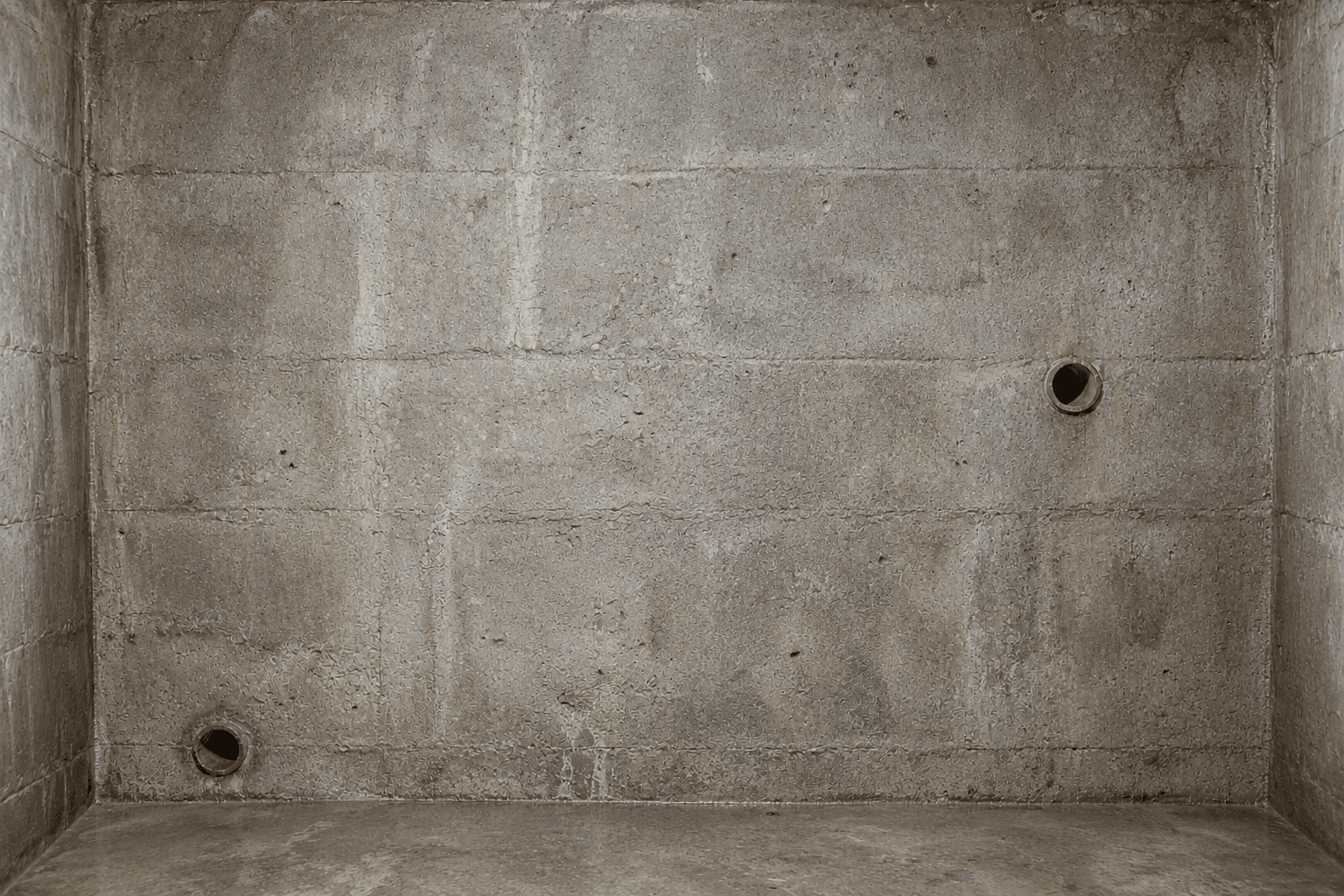
The same tank, photographed before and after cleaning. Drag the divider to compare.

What to expect.
What to have ready before the visit, and what you get after it. We confirm the preparations with you when we plan the service.
Before we arrive
Access, and someone on site
Reasonable access to the tank, the premises and the utilities the work needs, and a person who can let the team in and confirm the work when it is done.
Water while we work
The tank is emptied, so keep the water you need aside or arrange another supply until it is refilled.
After the service
A certificate and a dated sticker
You receive a Cleaning Certificate, and the Cleaning Date Sticker on the tank shows the date of this cleaning and the next due date.
A reminder before the next one
We get in touch about a week before the next due date. We recommend; you decide.
Cleaning and disinfection improve the hygiene of the tank. The condition of the stored water also depends on the source water, plumbing, tank condition and upkeep after the service.
How often to clean?
There is no single interval. It depends on the tank and how the building uses it.
Hospitals and healthcare
About every 3 months.
Schools
About every 6 months.
General guidance
Every 3 to 6 months. Sites that need more can clean every quarter.
What affects it: the tank's type and capacity, how often it is used, water quality, sediment build-up, the surroundings, the type of facility and its hygiene requirements.
Questions.
Is the disinfectant suitable for drinking-water tanks?
We use the Clean Tank agent, a food-grade, non-toxic antibacterial agent. The condition of the stored water also depends on the source water, plumbing, tank condition and upkeep after the service.
Is UV treatment always used?
No. It is an additional step, used where the tank and site allow it. We tell you when we plan the service.
What sizes of tank do you clean?
Domestic tanks up to 20,000 L, commercial overhead tanks up to 20,00,000 L and commercial underground tanks up to 1 crore L. Other capacities depend on the tank's design, access and site.
How much does it cost?
There is no fixed price list. The price depends on the scope, the tank's capacity, the location and the site. Send us the details and we will give you a quote.
Can the cleaning be scheduled through the year?
Yes. Under an Annual Maintenance Contract (AMC) the cleanings are scheduled, you get advance reminders and a service history is kept. Terms are agreed with each customer.
Who we work for.
For homes
Your family's overhead or underground tank, cleaned by a trained team and disinfected with the food-grade, non-toxic Clean Tank agent. Chandigarh, the tri-city and anywhere within 20 km.
Clean my home tankFor organisations
Hospitals, schools, hotels, offices, factories, housing societies and government sites. Multi-tank schedules, full documentation and annual maintenance contracts.
Services for organisationsFranchise
Run your own tank cleaning business with our method, training and support, built on work since 2008.
Explore the franchise
Plan your tank cleaning.
Tell us your location, tank type, capacity and cleaning requirement. We will help you plan the service.
Track record.
Years of tank cleaning
- 15+
The year we started
- 2008
Certified quality management
- ISO 9001:2015
States with our service presence
- 7